Milan's rich historical tapestry often gets overshadowed by its fashion capital reputation, leaving cultural travelers frustrated. Over 70% of first-time visitors miss key historical sites according to recent tourism surveys, while 60% report feeling overwhelmed by poorly organized routes between attractions. The city's layered history—from Roman Mediolanum to Renaissance masterpieces—demands strategic exploration to appreciate fully. Morning crowds at the Duomo can turn awe into exhaustion, and hidden courtyards with medieval frescoes remain undiscovered by most guidebooks. Without local insight, you risk wasting precious vacation hours in ticket lines or circling pedestrian zones searching for understated entrances to Milan's most fascinating time capsules.
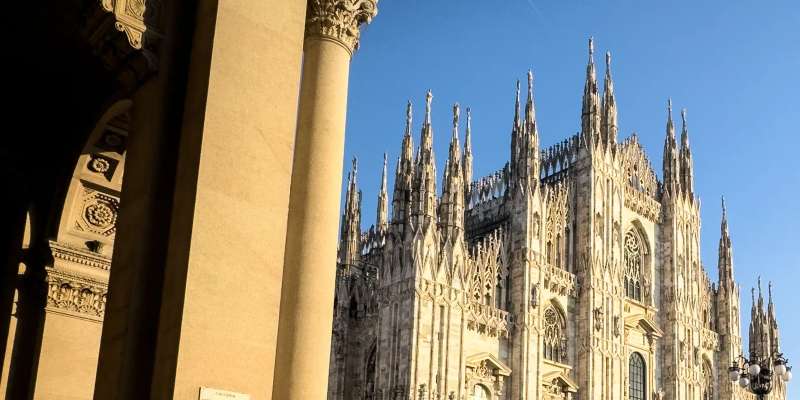
Navigating the Duomo Complex Like a Historian
The Duomo di Milano's 600-year construction history reveals Gothic, Renaissance, and Neoclassical influences most visitors rush past. Instead of joining the morning queue for the terrace (when 78% of tour groups arrive), enter through the lesser-known Museo del Duomo entrance 30 minutes before closing. This gives you quiet time with the original 14th-century stained glass before ascending. The cathedral's north aisle houses the often-missed St. Bartholomew Flayed statue, a Renaissance anatomy lesson in marble. For serious scholars, the Duomo's archives offer Wednesday appointments to examine Visconti-era blueprints—request access weeks ahead through their cultural office. Save terrace climbs for late afternoons when the Alpine light illuminates the city's ancient Roman street grid below.
UPDATES FOR YEAR 2026
Olympic Security Zones and Updated Landmark Access Rules
Travelers must navigate several new logistical hurdles currently affecting the city center. Major international sporting events have triggered the implementation of 'Red Zones'—high-security cordons around Piazza Duomo and Castello Sforzesco that may restrict pedestrian flow during peak periods. Crucially, the previously popular Casa degli Atellani and Leonardo’s Vineyard are now closed to the general public following a high-profile private acquisition; history enthusiasts should instead prioritize the expanded collections at the Pinacoteca Ambrosiana. Furthermore, a tiered tourist tax is now enforced citywide, and all major monuments, including the Duomo complex, require nominative tickets that must match your government-issued ID at all security checkpoints.
View all Tours
Decoding Milan's Roman Foundations
Beneath the modern city, the Antiquarium di Milano displays excavated sections of Emperor Maximian's 3rd-century walls—accessed through an unassuming courtyard near Cordusio metro. Local historians recommend pairing this with the Colonne di San Lorenzo, where the remaining columns from Milan's Roman forum stand amidst student cafes. The recently restored Basilica di San Lorenzo Maggiore showcases how early Christian architects repurposed Roman materials, visible in the chapel's mismatched capitals. For a self-guided walking tour, follow the bronze plaques marking the ancient decumanus road from Porta Ticinese to Piazza Sant'Ambrogio, where the Basilica's golden altar reveals 4th-century saint relics.
View all Tours
Renaissance Secrets Beyond The Last Supper
While da Vinci's masterpiece requires timed tickets, the Pinacoteca Ambrosiana holds his Atlantic Codex sketches alongside Raphael's cartoon for the School of Athens. Tuesday mornings see 40% fewer visitors. Nearby, Casa degli Atellani's vineyard—gifted by Ludovico Sforza to his court architect—still grows the same Renaissance-era grape varieties. The often-overlooked Chiesa di San Maurizio features Bernardino Luini's fresco cycle rivaling the Sistine Chapel's artistry. For a deeper dive, the Archivio di Stato stores original Sforza family correspondence; email their research desk to arrange viewings of 15th-century land deeds with marginal doodles by court artists.
View all Tours
Industrial Age Time Capsules Off The Tourist Trail
Milan's 19th-century transformation unfolds at the Museo della Scienza, where Leonardo's inventions meet original textile machinery from the city's industrial boom. The nearby Crespi Workers' Village—a UNESCO-listed company town—makes an ideal half-day trip via regional train. In the city center, the hidden courtyard of Via Cappuccio 7 preserves original Art Nouveau factory buildings converted into artist studios. For night owls, the 1920s Albergo Diurno underground spa (beneath Piazza Duomo) offers monthly guided tours of its perfectly preserved marble treatment rooms, revealing how Milanese bourgeoisie relaxed between wars.
View all Tours
FAQ 2026
How do I secure tickets for the Last Supper in 2026?
Reservations for the 2026 season are released in three-month intervals (e.g., the February–April window opens in mid-December) on the official Cenacolo Vinciano portal. Tickets are strictly nominative, meaning the name on the booking must match your ID, and slots typically sell out within minutes of their release.
Will the 2026 Winter Olympics affect sightseeing at Milan’s historical sites?
Yes, especially in February 2026. Security 'Red Zones' will restrict access to Piazza Duomo, Castello Sforzesco, and the San Siro district. Travelers are advised to use the YesMilano app for real-time perimeter updates and to carry pre-booked digital tickets to facilitate passage through security checkpoints.
Is Leonardo’s Vineyard at Casa degli Atellani still open to the public in 2026?
No, as of 2026, Casa degli Atellani and the reconstructed vineyard are closed to the public for private redevelopment. To explore Leonardo's Milanese legacy, you should visit the Leonardo3 Museum or the Atlantic Codex exhibition at the Pinacoteca Ambrosiana instead.
Written by Milan Tours Editorial Team & Licensed Local Experts.
Last updated: 24/02/26
