Navigating Milan's transport system can quickly drain your travel budget if you don't know the local tricks. Over 60% of first-time visitors overspend on unnecessary taxis or tourist shuttle services, unaware of efficient alternatives that cost a fraction of the price. The stress of deciphering foreign transit maps or worrying about ticket validation fines adds unnecessary tension to what should be an enjoyable Italian getaway. Between confusing zone systems and missing out on hidden pedestrian shortcuts, travelers often waste both time and money trying to explore this fashion capital. Fortunately, with the right local knowledge, you can experience all of Milan's highlights without breaking the bank or getting stuck in transport headaches.
Decoding Milan's metro system like a local
The ATM metro network forms the backbone of affordable Milan transport, yet many visitors make costly mistakes. Locals know the 48-hour travel card (€8.25) beats single tickets for anyone making more than four journeys. Watch for the green 'M' signs marking metro stations - these underground routes bypass Milan's notorious traffic. Key lines connect major attractions: the red M1 takes you from Duomo to Santa Maria delle Grazie (The Last Supper) in 12 minutes, while the yellow M3 reaches trendy Navigli district. Always validate paper tickets at yellow machines before boarding to avoid €35 fines. For tech-savvy travelers, the ATM Milano app offers mobile tickets and real-time updates, eliminating ticket office queues.
UPDATES FOR YEAR 2026
Navigating the New Digital Ticketing System and Blue Metro Line
Milan has officially transitioned to a fully digital transit network, retiring traditional disposable paper tickets. Travelers must now use the 'RicaricaMi' rechargeable card or the universal 'Tap & Go' system, which allows you to pay by tapping your contactless bank card or smartphone directly at metro gates and on board all trams and buses. The network has also expanded with the fully operational M4 Blue Line, providing a high-speed 12-minute link between Linate Airport and the city center (San Babila). Additionally, if you are planning to enter the historic center by car, be aware that the Area C access fee has increased to €7.50 per day to meet new environmental standards.
View all Tours
Walking routes that reveal hidden Milan
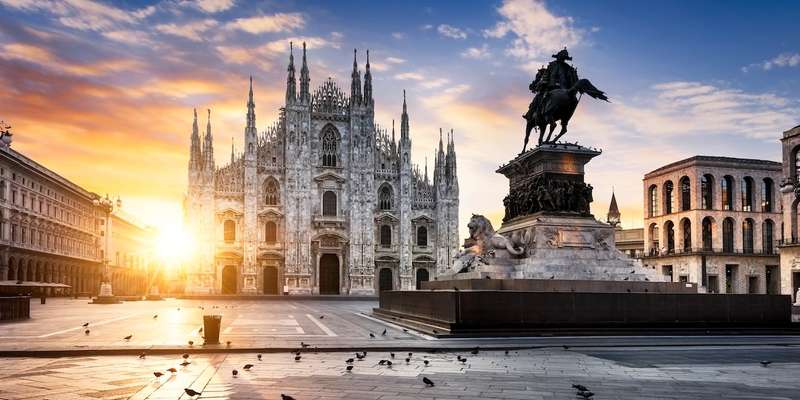
Milan's compact city center rewards those who explore on foot with architectural gems most tourists miss. A leisurely 20-minute stroll from Piazza del Duomo to Sforza Castle takes you past the elegant Galleria Vittorio Emanuele II and hidden courtyards of Brera district. Download the free 'Milano Pedonale' map showing car-free routes through the Quadrilatero della Moda fashion quarter. Locals favor the 'Cerchia dei Navigli' path following ancient canals - perfect for golden hour photography away from crowds. Comfortable shoes let you discover Milan's best free attractions, from the medieval streets of Porta Ticinese to the contemporary art murals in Isola neighborhood. These pedestrian routes often prove faster than waiting for transport during peak hours.
View all Tours
Smart alternatives to expensive taxis
When walking isn't feasible, Milan offers budget transport options most visitors overlook. The 'Urban' bike-sharing system (€4.50/day) provides eco-friendly transport between landmarks, with dedicated lanes along Corso Buenos Aires. Night owls should note tram line 1 operates until 2AM, connecting central stations to outer areas at regular fare prices. Shared 'BikeMi' electric scooters cost €6 for 30 minutes - ideal for reaching the futuristic Porta Nuova district. For groups, the 'Io Viaggio Ovunque' regional pass (€13/day) includes suburban trains to Lake Como or Bergamo. Always ask for 'corsa singola' (single ride) when taking Milan's distinctive yellow trams to avoid accidentally paying for multiple journeys.
View all Tours
Timing your travel to maximize savings
Strategic scheduling can dramatically reduce your Milan transport costs. Locals avoid weekday mornings (7:30-9AM) when business commuters pack metro carriages. Sunday travelers benefit from the 'Io Viaggio Relax' €3.50 day pass valid across all transport. Many museums offer free entry on first Sundays, allowing you to combine cultural visits with discounted mobility. Summer visitors find air-conditioned trams (lines 2,4,12) provide cooler alternatives to stuffy underground trains. Evening transport becomes particularly cost-effective after 8PM when traffic subsides and most attractions are within walking distance of each other. By aligning your itinerary with these local timing insights, you'll experience Milan's rhythm while keeping transport expenses minimal.
View all Tours
FAQ 2026
Can I still use old paper tickets for Milan public transport in 2026?
No, traditional disposable paper tickets were officially phased out on January 1, 2026. You must now use a 'RicaricaMi' rechargeable card, the ATM Milano app, or contactless 'Tap & Go' payment methods. If you still have old tickets, they can be exchanged for digital credit at ATM Points until June 30, 2026.
What is the cost of a standard metro ticket in Milan for 2026?
As of early 2026, a single urban ticket (Mi1-Mi3) costs €2.20 and is valid for 90 minutes. For better value, the 24-hour pass is priced at €7.60, and the 3-day (72-hour) pass costs €15.50, offering unlimited travel across the entire metro, tram, and bus network.
What is the fastest way to get from Linate Airport to the city center in 2026?
The fastest option is the M4 Blue Line metro, which is now fully operational. It connects Linate Airport directly to the San Babila station in approximately 12 minutes for the price of a standard €2.20 urban ticket, making it significantly faster and cheaper than taxis or previous bus shuttles.
Written by Milan Tours Editorial Team & Licensed Local Experts.
Last updated: 24/02/26
