Milan's architectural marvels attract over 9 million visitors annually, yet most only scratch the surface of this design capital. Architecture enthusiasts often leave frustrated after wasting precious hours in endless queues or missing lesser-known masterpieces tucked away in quiet neighborhoods. The overwhelming crowds at major sites like the Duomo can transform what should be an inspiring experience into a stressful ordeal, with peak wait times exceeding two hours. Meanwhile, hidden gems like Casa degli Omenoni or San Bernardino alle Ossa remain overlooked despite offering equally breathtaking design details. This disconnect between expectation and reality leads many travelers to miss Milan's true architectural soul – the seamless blend of medieval, Renaissance, and contemporary styles that make the city unique.
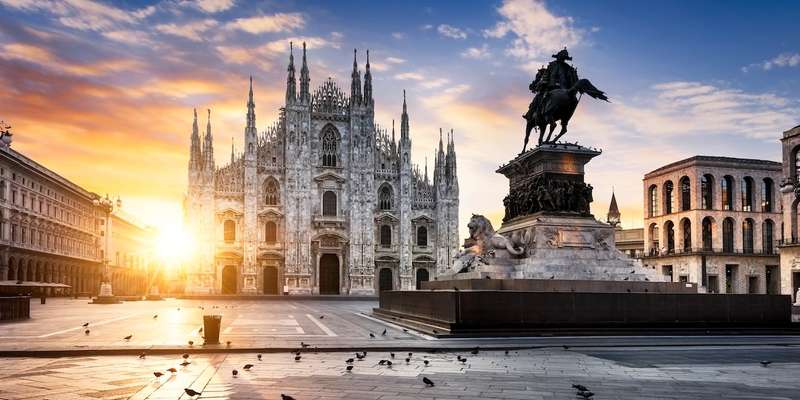
Beating the Duomo crowds without missing the details
The Milan Cathedral's intricate facade deserves unhurried appreciation, something nearly impossible during midday rushes. Savvy visitors arrive at opening time (8am) or opt for late afternoon slots when tour groups dissipate. For those who can't avoid peak hours, focus first on the lower exterior walls where most miss exquisite carvings like the 'New Law' statue near the central door. Inside, lighting conditions dramatically affect your experience – midday sun transforms the stained glass into a kaleidoscope, while softer morning light better reveals the apse's 16th-century sculptures. Don't overlook the often-empty baptistery beneath the cathedral, where 4th-century foundations showcase Milan's layered history. If mobility allows, the terraces offer unparalleled city views, but skip the elevator line by taking the historic staircase up (and elevator down for free).
View all Tours
Beyond the obvious: Milan's underrated architectural treasures
While the Duomo dominates postcards, Milan's architectural narrative unfolds in quieter spaces. The 16th-century Casa degli Omenoni, a five-minute walk from La Scala, features eight striking telamones carved by Leone Leoni – Michelangelo's contemporary. Few know this palazzo's courtyard remains freely accessible during business hours. For Gothic enthusiasts, Santa Maria presso San Satiro hides Bramante's ingenious false apse, an optical illusion solving spatial constraints. The nearby Archivio di Stato houses an overlooked medieval cloister where you can study centuries-old architectural drawings. Contemporary design lovers should seek out the Vertical Forest apartments near Porta Garibaldi, a living experiment in urban biodiversity. These sites rarely appear on packaged tours but offer intimate encounters with Milan's design evolution, often with no admission fees or queues.
View all Tours
Timing your visits for optimal light and access
Architectural appreciation depends heavily on lighting conditions and visitor flows. Renaissance masterpieces like Santa Maria delle Grazie (home to The Last Supper) reveal different details throughout the day – late morning light perfectly illuminates Bramante's tribune. Most visitors don't realize many churches enforce midday closures (typically 12-3pm), making early visits essential. The often-overcrowded Galleria Vittorio Emanuele II transforms at 8am when natural light streams through the glass dome without the usual crowds. For modern architecture, visit the Pirelli HangarBicocca contemporary art space during weekday lunch hours when the massive Anselm Kiefer installations feel nearly private. Even the Duomo's archaeology area becomes more contemplative after 4pm when school groups depart. These timing nuances separate frustrating visits from transcendent architectural experiences.
View all Tours
Smart passes and local-led insights worth considering
While Milan's architecture can be explored independently, strategic investments enhance experiences. The Duomo's combined terraces-and-museum pass (bookable 60 days ahead) provides queue-free access to the rooftop and the often-empty Duomo Museum across the square. For broader access, the Milan Pass includes tram rides – ideal for appreciating Rationalist architecture along routes 1 and 10. Local-led walking tours focused on specific eras (like Liberty Style or Fascist-era buildings) reveal contextual details most miss. Evening architecture aperitivi tours offer exclusive after-hours access to landmarks like Villa Necchi Campiglio. Free options abound too – the Triennale Design Museum's terrace provides stunning views of the Sforza Castle, while the Palazzo Morando's fashion exhibits include access to perfectly preserved 18th-century interiors.
UPDATES FOR YEAR 2026
Navigating the New Architectural Landscape: Logistics and Access Updates
The architectural journey through the city now includes the fully operational Palazzo Citterio, the crowning jewel of the 'Grande Brera' project, which integrates 20th-century art within a restored 18th-century palace. Travelers must now navigate stricter access protocols: nominative tickets are mandatory for top-tier landmarks, meaning your entry passes must match your government-issued ID. Additionally, the historic center has seen a significant expansion of traffic restrictions, particularly in the Quadrilatero della Moda, which is now a 24/7 pedestrian-priority zone. If visiting during the peak winter sports season, expect pop-up security cordons and temporary transit diversions, making digital skip-the-line bookings the only reliable way to guarantee access to the city's most fragile heritage sites.
View all Tours
FAQ 2026
When do Last Supper tickets go on sale for the 2026 season?
Tickets for the Cenacolo Vinciano are released in quarterly batches; for visits between February and April 2026, the booking window typically opens in mid-December. Tickets are strictly nominative, so ensure the name on your booking matches your passport exactly to avoid denied entry.
Will the 2026 Winter Olympics affect architectural tours in Milan?
Yes, during the February 2026 Games, temporary 'Olympic ZTL' (Limited Traffic Zones) will be active, and security screenings will be intensified around major landmarks. Visitors should prioritize the metro system and allow an extra 30–45 minutes for security checks at sites like the Duomo and San Siro.
Is the Palazzo Citterio open for architecture lovers in 2026?
Palazzo Citterio is now fully open as part of the 'Grande Brera' expansion, offering free access to its internal courtyard and the 'Tempietto' pavilion. In 2026, it serves as a primary hub for modern art, showcasing how 18th-century palace architecture can be successfully adapted for contemporary museum standards.
Written by Milan Tours Editorial Team & Licensed Local Experts.
Last updated: 24/02/26
